


Chapter 230
I am sorry to begin on such a personal note, but something deeply shocking has happened to me.I am the youngest of three brothers. My second-oldest brother and I are identical twins, so we are naturally the same age. Recently, I learned that he had been rushed to the hospital after being diagnosed with Stage IV rectal cancer. Furthermore, the cancer has already spread to his lymph nodes and brain.
Many people believe that cancer is largely influenced by genetics, so some of you may wonder whether I am also at risk.
Identical twins share exactly the same DNA—they are, in effect, natural clones. Science fiction movies often feature clone armies created from the DNA of brilliant individuals such as Albert Einstein or elite soldiers with extraordinary physical abilities. There is certainly a strong genetic component to intelligence and athletic ability, which is why preserving superior genetic traits has long attracted scientific interest. Today, sperm banks store donations from people of various ethnic backgrounds, appearances, educational achievements, and physical characteristics.
Of course, whether a child grows up to be exceptional also depends on the egg, and there is no guarantee that a child will develop exactly as parents might imagine.
Looking at my own daughters, I have come to realize that genetics are passed down through generations in unpredictable ways. One child may resemble me in certain respects while inheriting other characteristics from her grandmother. Inheritance is not simply an equal blend of the parents' traits.
With identical twins, however, appearances are almost indistinguishable. Unless someone knows us well, they usually cannot tell us apart. When I was in college, complete strangers would sometimes greet me warmly, only for me to discover they were actually friends of my brother.
Until junior high school, we attended the same schools. On several occasions, we even received exactly the same total score on mock examinations, leaving our teachers and cram school instructors amazed, saying, "Twins really are incredible." Our performances in events such as the 100-meter sprint and the 1,500-meter run were also nearly identical. We were better athletes than students, and together we often became the stars of sports festivals and ball game tournaments.
After high school, however, our paths gradually diverged. We attended different public high schools in Nagoya and, as we moved through university and into adulthood, the differences between us became increasingly apparent.
The greatest difference was not our genes but the way we thought.
I have always been relatively cautious. Although I am fundamentally optimistic, I make a habit of preparing for the worst. In that sense, I am more like the industrious ant from Aesop's fable.
My brother, on the other hand, has always been optimistic. He never devoted himself seriously to studying or athletics because he believed that his natural intelligence and athletic ability would always carry him through. He was more like the carefree grasshopper.
Even when two people possess exactly the same DNA, such differences in mindset can create enormous differences later in life.
I chose the difficult path of becoming an entrepreneur, enduring many hardships before arriving where I am today. My brother chose the life of an employee, relying on the intelligence and athletic ability he had been born with to perform his work.
Neither way of life is inherently better or worse. They are simply different choices.
What I want to emphasize is that even identical twins with the same genetic makeup become entirely different individuals when they develop different ways of thinking. In other words, even if one could create one hundred clones of Albert Einstein, it does not follow that all one hundred would go on to make revolutionary discoveries.
Likewise, even among people with identical genes, cancer is not determined by genetics alone. Lifestyle plays a crucial role, especially diet, exercise, and maintaining a regular daily routine.
Someone might ask, "But how can you know that?"
After all, although I am healthy today, I could develop rectal cancer tomorrow just as my brother did.
That is certainly possible.
Personally, I believe that I have inherited a genetic predisposition to rectal cancer. However, I also believe that healthy eating habits and a disciplined lifestyle may help prevent that predisposition from becoming reality.
When we were children, people often referred to us simply as "one half of the twins." Hearing that my other half has been diagnosed with cancer has been heartbreaking.
Yet I hope that, one day, people will also be able to say this:
The other half of the twins lived a long and healthy life.
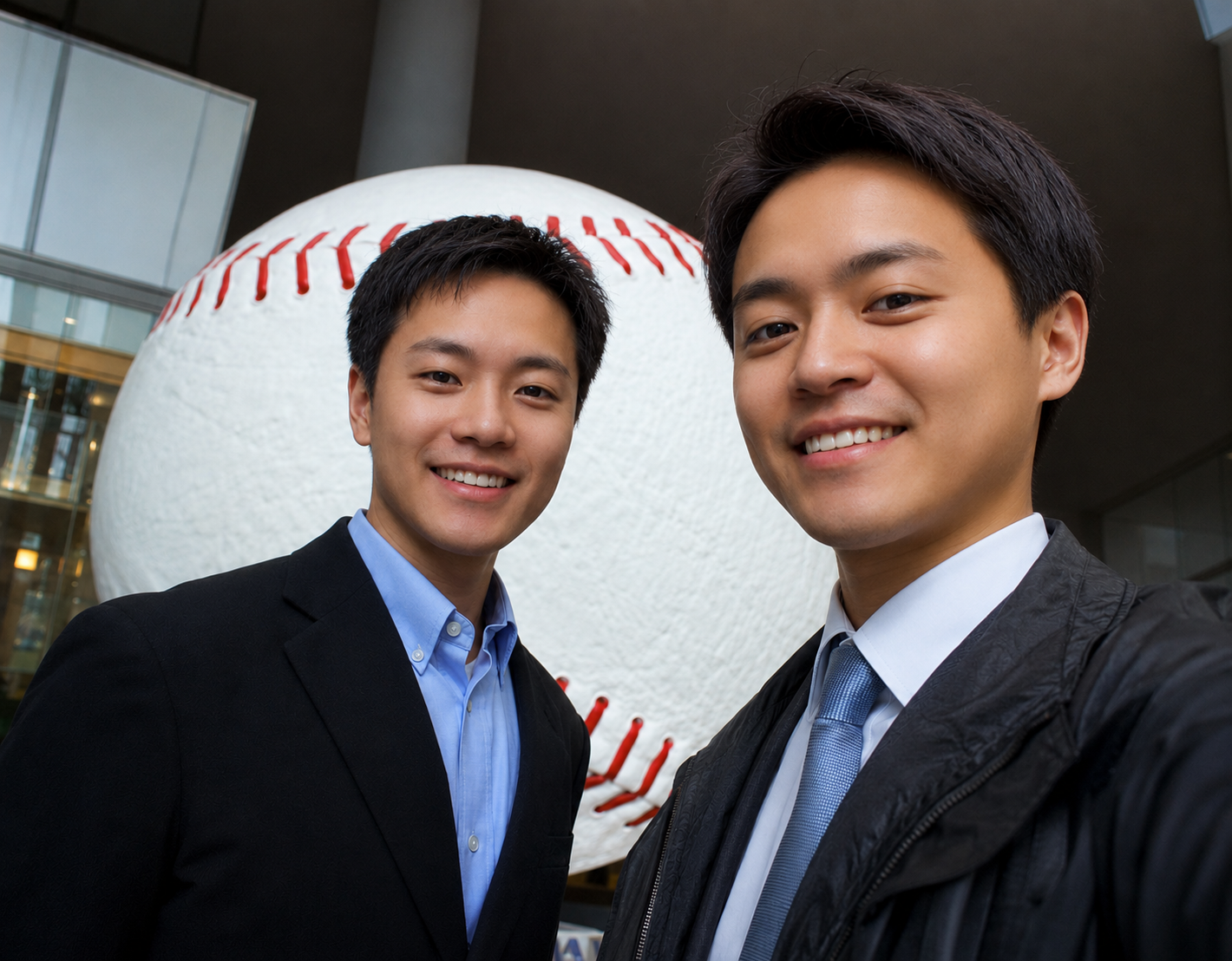
"Twin brothers who are fresh out of college"
(me on the left)
July 1, 2026
Reflections Upon Learning of My Twin Brother's Cancer Diagnosis
